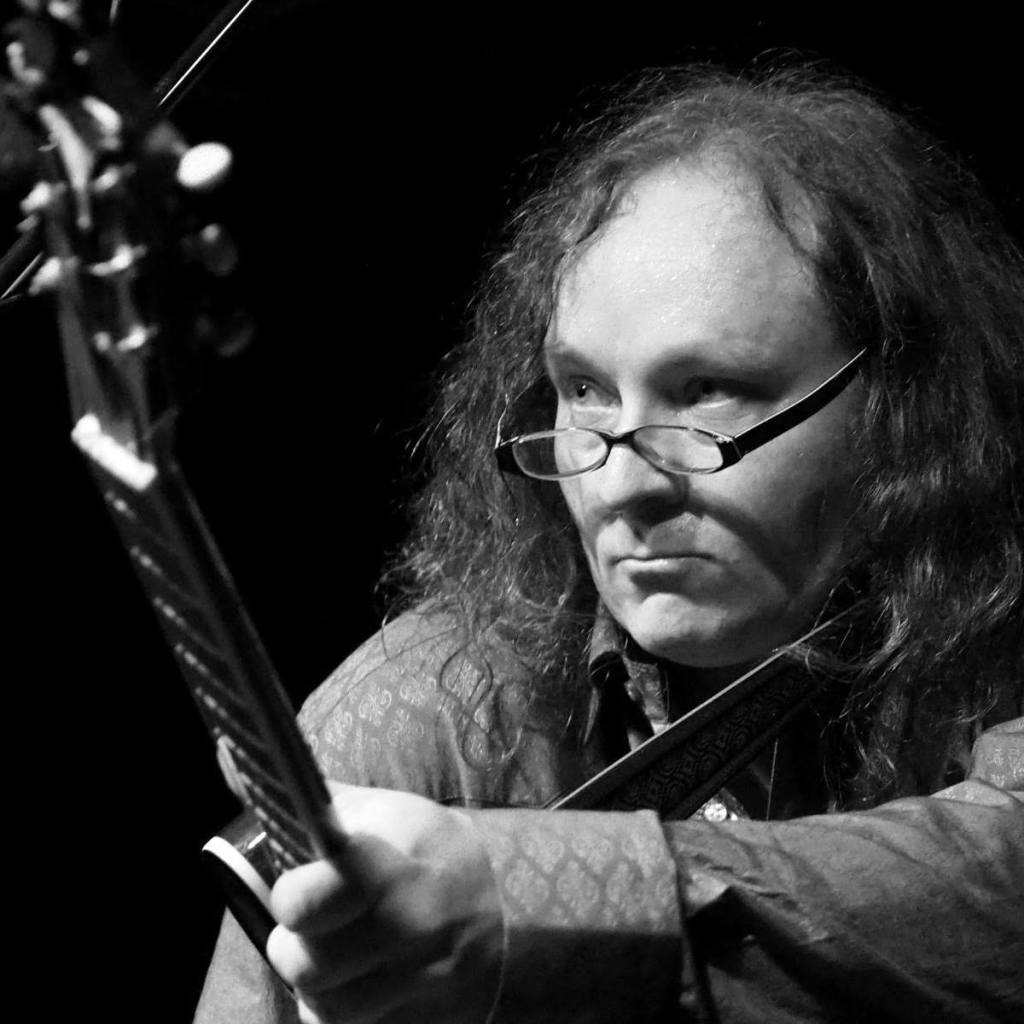
Quiconque traîne ses guêtres dans les salles de concert montréalaises a sans doute croisé « Les Ismore » : une présence discrète, insaisissable, mais impossible à ignorer. Intrigué par cette silhouette devenue le repère lors de mes virées à travers l’underground de la ville, j’ai voulu en savoir plus, alors je l’ai interviewé et j’ai écouté l’intégralité de sa discographie.
Les Ismore est anglophone par conséquent l’article est en anglais.
For most people, “less is more” is a motto that champions a stripped-down, minimalist approach to life. But for Montrealers who’ve explored the grittiest corners of the city, “Les Ismore” refers to a mythical creature, a chimera that appears regularly at local venues like Barfly, Hemisphere Gauche, The yellow door.
“Less,” as everyone calls him, is a hyperactive underground Montréal musician. When he isn’t running the coolest open mic in town (every Wednesday at Hémisphère Gauche), he’s performing in the diviest bars the city has to offer. With his long hair, colourful outfits, and legendary glasses, Less is instantly recognizable. No one channels the aging-hippy vibe with quite the same authenticity as this outsider artist.
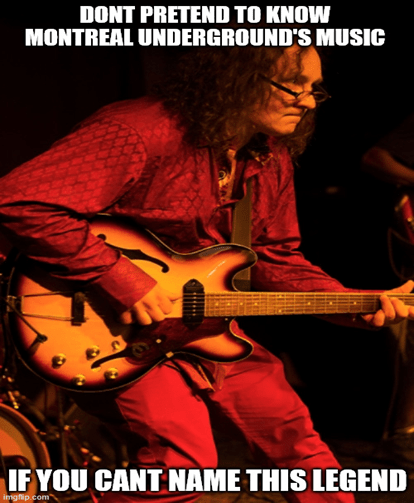
I had the immense privilege of seeing Less live for the first time in 2021 at Barfly with Elbow Down and the Diplomats. To this day, I vividly remember his performance: a psychedelic thunderstorm that carried the candor of Daniel Johnston and the ferocity of Los Saicos. His bassist at the time, Jackson, arrived late but jumped right in, unleashing insane jazz-fusion basslines that would relegate Stanley Clarke to the weekend-warrior category.
After that first encounter, I couldn’t stop wondering: Who is Less? Where does he come from? How does he manage to be so active? None of my friends could answer, but they shared my curiosity. So, after an excessively spicy Tunisian meal, I mustered the courage (some people find theirs in alcohol, I find mine in harissa) to ask Less for an interview, to which he answered positively. He agreed to meet during his open mic at Hemisphere Gauche.
I was excited, but I also had homework to do. You don’t meet a municipal treasure unprepared. Less is very prolific: eleven albums, three EPs, and a single on Bandcamp.
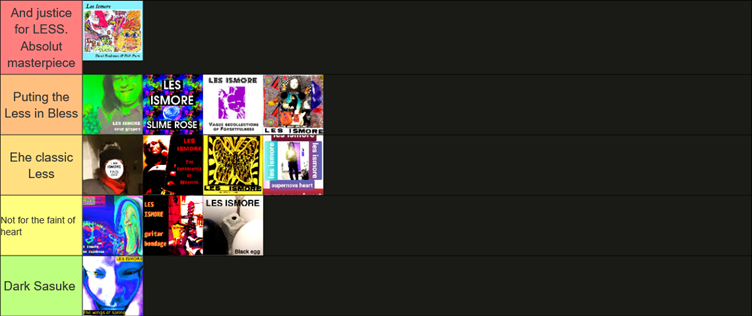
I had one week to listen to them all. Did I succeed? Yes. Less’s music followed me everywhere, at work, on my commute, while reading. I drove my bandmates, friends, and fiancé crazy with him. His discography is a beautiful mess of proto-punk energy and Beatlesque melodies, all recorded in the most gloriously lo-fi way imaginable.
My tier list of Less’s music
Fast forward to the night of the interview: I was nervous, I won’t lie’. Who would I meet? Would he be kind? As I walked into Hémisphère Gauche, my anxiety began to melt away. Like a druid carefully preparing his secret brew, Less was meticulously sound checking every instrument for the open mic. It is worth noting that his open mic isn’t your typical performative Montréal affair with musicians competing to flex their chops. Instead, Less’s open mic has the atmosphere of Twin Peaks or True Detective best episodes. The vibe is warm, strange, and inviting. Less is incredibly sweet, and the musicians are welcoming. It’s the perfect place for a first onstage experience.
I came for an interview, but by the end of the night, I found myself jamming with Less and other musicians on a feverish version of Voodoo Child. It’s the kind of memory I’ll carry with me until my last breath. Thank you, Less.
Hello Less, can you talk a bit about yourself?
I’m from Tillsonburg, a small town in southern Ontario near London. I spent the first four years of my life on a tobacco farm. Back then, I’d go on little adventures with my dog to distract myself from the isolation and loneliness of the place. Then my family moved to Toronto for a couple of years before settling in Montréal when I was seven.
How did your musical journey begin?
I started with classical piano around the age of five. I got good quickly because I liked my teacher, he was encouraging. But eventually, I grew tired of it and wanted to learn electric guitar. My father bought me one when I was twelve, and I had lessons for about three months. Since I progressed rapidly, I quickly got bored of scales and just wanted to write my own songs. I spent hours in my room listening to and playing music, trying to understand the state of mind of the musicians. They seemed so cool. I wanted to figure out how to make mind-blowing music too.
What were you listening to at the time?
A lot of sixties music and classic rock, The Beatles, The Rolling Stones, Led Zeppelin, Pink Floyd, all the bands from the British invasion. I also listened to tons of punk and garage rock: UK Subs, The Clash, the Sex Pistols. I loved the ethos of punk rock: the anti-stadium attitude, the DIY spirit. Punk was for people like me, people who came from nothing. That’s why it mattered so much.
When did you start writing your own songs?
I started at fourteen, with a little tape recorder. I slowly got better and wanted to play with other people. But high school was a total “guitar snobatorium.” Everyone wanted to shred like Van Halen. I tried to fit in, but I was constantly pushed aside. I was an outsider. I couldn’t find my place in any scene, bouncing back and forth between rock and metal. Eventually, I accepted that I didn’t fit into any category, even when I tried.
Were you playing with others in high school?
Here and there, yes. I also liked to get stoned and listen to records. Psychedelics helped me understand artists and music on a different level. But at some point, I felt the need to slow down, so I turned to meditation and yoga to reach altered states of consciousness instead. Getting “in the zone” really helps with songwriting. In that state, four hours can pass by and feel like twenty minutes, especially when you’re focused and free of distractions.
What happened after high school?
I went to Concordia to study English literature and mathematics. But halfway through, I got an offer to tour with a glam/hard rock band called Broken Rule.
Note: The band released two albums. Less is credited for vocals, keyboards, and harmonica on their self-titled debut (1990, Square Circle Records).
I played with them for four and a half years, touring coast to coast across Canada. I was the frontman, playing rhythm guitar, keyboards, and sometimes harmonica. It was a radio-friendly kind of hard rock/glam band.
Was life on the road difficult?
When you live constantly on each other with only a suitcase for 6 months you experience something unique. Constant travelling is like a hyper acceleration of socializing. It helped my creativity a lot. I think it’s important for a musician to tour, not necessarily all the time, but at least once, to experience it. Of course, it wasn’t always easy. After four years, tensions started to build. It’s normal, everyone needs space, even from people you love. I was lucky to be with great guys; we were like brothers. But once fights start, it ruins everything: the performances, the road life. So, we went our separate ways. We’ve all moved on, but I keep in touch with some of them. We bump into each other sometimes and catch up. That’s nice.
What did you do after the split of Broken Rule?
I lived in northern Saskatchewan for four years. It was a very different life, lots of farmers, which brought me back to my childhood. I got into country music there. It fascinated me, so I absorbed everything: the scales, the chords, the feel. I also hosted an open mic and played in a trio. It was fun. Then I came back to Montréal and lived in Côte-des-Neiges and did a bit of music. That neighbourhood is such a melting pot. Thanks to the Jamaican community there, I discovered reggae. That’s the beauty of music: you meet all kinds of people, and each brings something new.
What about your current band, Les Ismore?
The lineup has changed a lot, but right now we’re a trio: Larry Lamborghini on bass and Ziggy on drums. Ziggy’s a multi-instrumentalist, he plays drums, keyboards, guitar. I’m even trying to get him to play drums and synth at the same time! We’re all a bit crazy, so we’ll figure it out. Our songs are spontaneous, instinctive. Often, I’ll write something in ten minutes and record it immediately, usually on my phone. I like that immediacy. The first attempt is often the best. After that, it’s like beating a dead horse.
When I saw you in 2021 at Barfly, you had a different band. I vividly remember Jackson, your bassist then.
Jackson was an exceptional player. He came from a rich musical background in Madagascar, where he toured in his father’s band. Later, he left Les Ismore to study jazz at McGill. He’s a great musician and a wonderful human being. I like him a lot. We still work together sometimes, doing odd jobs for a landlord.
You’ve had quite a ride in the Canadian DIY music. Any advice for younger musicians?
“Know yourself.” That’s the key to becoming creative and authentic. And don’t just practice scales, practice songwriting too. When you write songs, you internalize scales and chords until they become second nature. That’s why it’s so important.
If you had to pick the three most influential artists for you, who would they be?
Only three? That’s tough. For guitar solos, maybe Hendrix or Van Halen. For songwriting, Dylan or The Beatles. For showmanship, I’d say Steven Tyler, James Brown, or Freddie Mercury. You asked for three, and I gave you seven.
Sometimes Less really is more.

 À la dérive
Laisser un commentaire